

UAE financial aggregator: Building a comprehensive digital presence from a single page
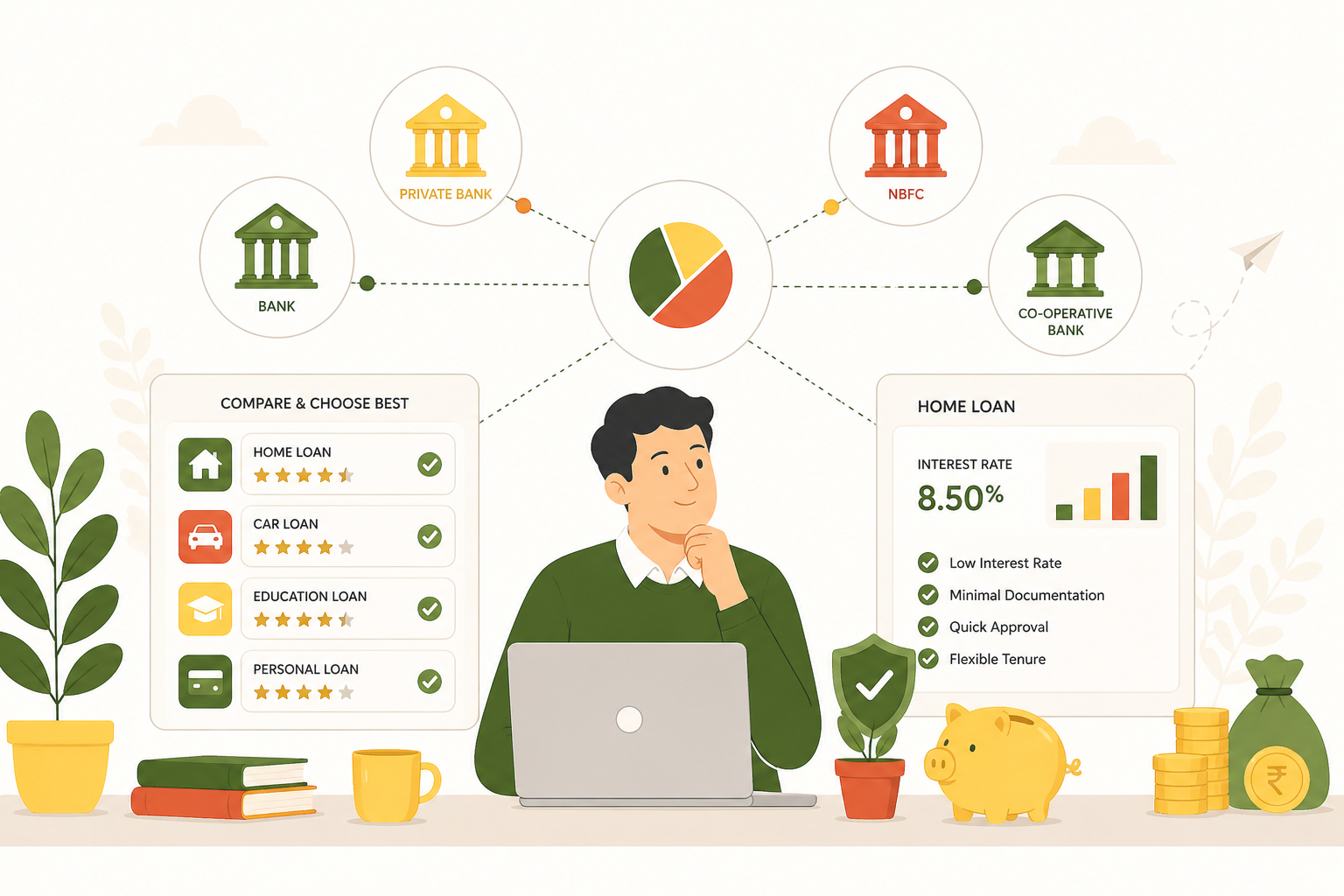
A UAE-based financial aggregator came to us with a one-page website and big ambitions. They wanted to become the go-to platform for UAE residents comparing credit cards, personal loans, and car loans, competing with established players in one of the most competitive search verticals in the region.
Competing in financial services with almost nothing to show
Financial services SEO in the UAE is brutal. You're up against banks, insurance companies, and well-funded comparison platforms with years of domain authority. Our client had one page, a basic description of who they were, and no dedicated content for any of their core products.
Google had nothing to rank. Users had nothing to compare. And without the trust signals that Google's EEAT guidelines demand for financial content — expertise, authoritativeness, and trustworthiness — even well-written pages struggle to gain traction in this space.
The challenge
What we did
A full SEO and content buildout across every layer
We started with a complete content and SEO strategy — keyword research across all three product verticals, competitor analysis against top-ranking UAE financial platforms, and a content architecture designed to compete for both informational and transactional searches.
Optimised every ranking signal sitewide (On-page SEO)
Title tags and meta descriptions are written for every primary page, targeting high-volume UAE financial keywords. H1, H2, and H3 tag structure built to match search intent. Canonical tags, breadcrumb navigation, internal linking architecture, and image alt attributes were implemented across the site.
Built the trust architecture Google demands for financial content (EEAT & trust)
Financial content falls under Google's YMYL (Your Money, Your Life) category — meaning Google applies extra scrutiny to expertise, authority, and trustworthiness signals. We redesigned the homepage to lead with credibility: who they are, why they're trustworthy, and what makes them different from other financial comparison platforms in the UAE.
Each service page was structured to answer the questions real users have — eligibility criteria, interest rates, documents required, application process — before asking them to take action.
Schema implemented across every page (Schema markup)
Breadcrumb schema, FAQ schema, and structured data implemented sitewide. Each service page received a full set of FAQ schema questions written to target People Also Ask (PAA) results — 13+ questions per page covering everything from eligibility and documents to interest rates and application timelines.
This gives the site a significant advantage in search results — FAQ schema can trigger rich results directly in Google, increasing click-through rate without needing to rank higher.
Content built for comparison, not just information (Content strategy)
Each service page was structured around how UAE residents actually compare financial products — by benefit type, by eligibility, by bank partner. Credit card content was organised around cashback cards, travel cards, free-for-life cards, and balance transfer cards — matching the way high-intent users search. Personal loan and car loan pages followed the same intent-driven structure.
Clean technical foundations across the new site (Technical SEO)
URL structure reviewed and standardised, robots.txt and sitemap configured, content-to-code ratio improved, mobile friendliness verified, and page structure reviewed for UX and crawlability. Navigation updated with financial service verticals in both top nav and footer.
Car loans
Dedicated page targeting high-intent loan searchers
Personal loans
Full service page with structured content and schema
Homepage
EEAT-optimised with trust signals, CTAs and FAQ schema
Credit cards
Dedicated comparison page — benefits, eligibility, application
The brief
Transform a single-page website into a credible, comprehensive financial aggregator — with dedicated service pages, keyword-targeted content, schema markup, and the trust architecture Google requires for YMYL (Your Money, Your Life) content.
+559%
Total session growth in 6 months
+551%
Total user growth (1K → 6.5K)
+186%
Click growth Oct '23 → Apr '24
+2,862%
Impression growth — 2K → 64K
The results
From a one-page brochure to a credible financial platform
In just six months — October 2023 to April 2024 — the results were dramatic. Total sessions grew from 1,157 to 7,627, impressions exploded from 2,178 to 64,511, and the site went from virtually invisible to generating consistent organic traffic across all three product verticals.
Total sessions
1,157 → 7,627 · +559%
Total users
1,004 → 6,535 · +551%
Clicks (GSC)
324 → 926 · +186%
Impressions (GSC)
2,178 → 64,511 · +2,862
Why this matters in financial services specifically
In YMYL categories, Google doesn't just reward good content — it rewards trustworthy, well-structured, authoritative content. Building the EEAT foundations correctly from the start means the site is positioned to grow organically over time, not just rank for a few keywords.
Each service page is now a standalone ranking asset — targeting informational, comparison, and transactional keywords at every stage of the user's decision journey. The FAQ schema implementation gives additional surface area in Google search results beyond the standard blue link.
The takeaway
Building SEO in financial services isn't just about writing good content — it's about building the kind of website Google trusts to give people accurate financial guidance. That means getting the technical foundations right, structuring content around real user intent, and making trust signals visible at every touchpoint.
Starting from a blank page is actually an advantage — you can build everything the right way from the ground up, without inheriting years of bad decisions to undo.